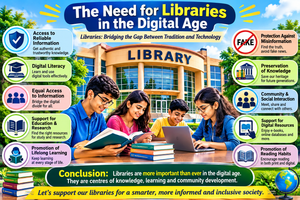
Library Bridging the gap between tradition and digital
Libraries are as old as human civilization. These are important institutions for human and national building. If libraries had not been important institutions for the last two thousand years, they would have ceased to exist long ago. A library is a place of culture and knowledge. It plays an important role in society.
In a world where information is readily accessible, the significance of libraries becomes clear. However, this institution plays an important role in this digital era. Libraries provide a place for people to collect and use information regardless of their income level or social status.
In this article we will explore the value and role of libraries in the digital age.
What’s the library?
Libraries have been an important part of society for centuries, where people can go to find information and knowledge. A library is the heart of an institution. “If the library is called the heart of an institution, then we can say that the heart purifies our blood just as the library purifies knowledge.
Libraries are a safe and welcoming place for people to gather and learn. In the Internet age, libraries must be relevant and accessible to all.
The Value of Libraries
Libraries play a very important role in our society, especially in the digital age. They provide free or low-cost access to books, newspapers, journals, digital resources, and other valuable information that may not otherwise be easily available.
The major values of libraries are as follows:
1. Free Access to Information: Libraries provide equal access to knowledge and information for everyone, regardless of their economic background.
2. Lifelong Learning: They encourage reading, education, research, and continuous learning throughout life.
3. Social Inclusion: Libraries provide equal opportunities for all sections of society, including children, students, senior citizens, and disadvantaged communities.
4. Support for Democracy: Libraries promote informed citizenship by providing access to reliable information, diverse opinions, and ideas.
5. Development of Critical Thinking: They help people develop analytical skills, evaluate information, and distinguish between facts and misinformation.
6. Digital Literacy: Modern libraries help people learn how to use computers, the internet, and digital resources effectively.
7. Preservation of Knowledge and Culture: Libraries preserve books, manuscripts, historical documents, and cultural heritage for future generations.
8. Community Development: Libraries act as community centers where people can meet, exchange ideas, and participate in educational and cultural activities.
9. Equal Opportunities: Libraries help reduce the knowledge gap between rich and poor by making educational resources available to everyone.
10. Personal and Intellectual Development: Libraries inspire creativity, imagination, independent thinking and personal growth.
Conclusion
Libraries are not merely storehouses of books; they are centers of knowledge, education, culture, and social development. They empower individuals, strengthen democracy, and build an informed and educated society. Therefore, libraries remain essential institutions in both traditional and digital societies.
The Role of Libraries in the Digital Age
Libraries play an important role in the digital age. They provide access to valuable information resources that may be difficult to find elsewhere. They also help people understand, evaluate, and verify the information they read, see, and hear, enabling them to make informed decisions.
The major roles of libraries in the digital age are as follows:
1. Access to Digital Information: Libraries provide access to e-books, e-journals, online databases, digital newspapers, and other electronic resources.
2. Digital Literacy: Libraries help people develop digital skills and learn how to use computers, the internet, and digital technologies effectively.
3. Information Literacy: They teach users how to identify reliable information, evaluate online sources, and avoid misinformation and fake news.
4. Lifelong Learning: Libraries provide opportunities for continuous education, self-learning, research, and professional development.
5. Social Interaction: Libraries serve as community centers where people can meet, share knowledge, exchange ideas, and participate in cultural activities.
6. Promotion of Reading Habits: They encourage reading through both printed and digital materials.
7. Equal Access to Knowledge: Libraries reduce the digital divide by providing internet facilities and digital resources to people from different economic and social backgrounds.
8. Preservation of Digital Resources: Libraries preserve valuable digital documents, historical records, photographs, and cultural heritage for future generations.
9. Research and Innovation: Libraries support students, teachers, researchers, and professionals by providing access to updated information and research materials.
10. Support for Democracy: Libraries promote informed citizenship by providing access to diverse viewpoints, reliable information, and knowledge.
Challenges Faced by Libraries in the Digital Age
Although libraries play an essential role in modern society, they face several challenges in adapting to the rapidly changing digital environment.
The major challenges are as follows:
1. Insufficient Funding: Libraries often depend on government grants and public funding. Limited financial resources make it difficult to purchase new books, computers, software, and digital resources.
2. Digital Divide: Many people do not have access to computers, smartphones, or high-speed internet. Libraries must help bridge this gap.
3. Technological Changes: Rapid technological developments require libraries to regularly update their infrastructure, software, and digital services.
4. Changing Reading Habits: People’s reading habits are changing from printed books to e-books, websites, and other digital platforms. Libraries must adapt their collections and services accordingly.
5. Copyright and Licensing Issues: Accessing, sharing, and preserving digital resources can be difficult because of copyright laws and licensing restrictions.
6. Information Overload: The internet contains a huge amount of information, making it difficult for users to identify accurate and reliable sources.
7. Cybersecurity and Data Privacy: Libraries must protect users’ personal information and digital records from cyber threats and unauthorized access.
8. Lack of Skilled Staff: Modern libraries require trained professionals with knowledge of ICT, digital cataloguing, database management, and digital preservation.
9. Digital Preservation: Preserving electronic documents and digital resources for long-term access is a major challenge because technology and file formats keep changing.
10. Maintaining Relevance: Libraries must continuously improve their services to meet the changing needs and expectations of modern users.
Conclusion
Despite these challenges, libraries remain valuable institutions in our society. They are no longer just places for storing and lending books; they have become centers of digital learning, information, research, and community development. Libraries must adopt modern technologies, improve digital services, and develop skilled human resources to remain relevant in the digital age.
In short, the library of the future will be a combination of traditional knowledge resources and modern digital technology.
How to Support Libraries
Libraries are important cultural institutions that play a vital role in our communities by providing valuable information resources and services. To remain relevant and valuable in the digital age, libraries must keep pace with changing technologies and the evolving needs of users.
There are several ways in which individuals and communities can support libraries:
- Donating Books and Other Materials: People can donate books, newspapers, magazines, and other useful materials to libraries.
- Supporting Library Funding Initiatives: Individuals and organizations can support library funding programs through financial contributions and donations.
- Volunteering: People can volunteer their time and skills to help libraries organize activities and provide services.
- Promoting Library Services: People can encourage others to use libraries and participate in reading and educational programs.
- Supporting Digital Development: Individuals and organizations can help libraries improve their digital facilities, computers, and internet access.
The Future of Public Libraries
Public libraries are facing increasing pressure to maintain their relevance in the digital age. Many people believe that libraries are no longer necessary because almost everything is available online. However, not all information is freely or permanently available on the internet. Some digital resources may become inaccessible or difficult to obtain in the future.
Libraries will continue to play a very important role in society. They provide spaces where people can gather, share their interests, exchange ideas, and connect with others.
Libraries make valuable information and knowledge accessible to people who might otherwise be unable to obtain them. In a world increasingly affected by fake news and misinformation, libraries can help people identify reliable and trustworthy sources of information.
In the future, public libraries will combine traditional library services with modern digital technologies. They will continue to support education, research, digital literacy, and lifelong learning.
Conclusion
Libraries are essential institutions because they help people access information, acquire knowledge, and learn new things. They also provide opportunities for social interaction, communication, and cultural exchange.
A library is a special place that promotes education, knowledge, and an understanding of different cultures. Therefore, it is important to recognize the value of libraries, preserve them, and develop their services for future generations.
Final note: Libraries are not merely places where books are stored; they are centres of knowledge, culture, learning and community development. Their importance will remain significant for generations to come.